



Search engines have changed dramatically in recent years. Instead of relying only on occasional algorithm updates, modern search systems use AI to learn and adjust continuously. Search is no longer fixed; it is always changing.
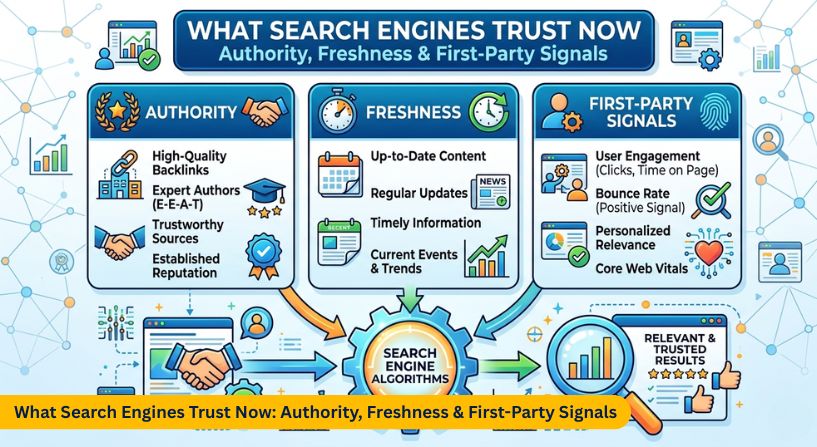
As a result, the signals search engines use to decide which content to trust have also changed. Three factors now matter most: authority, freshness, and first-party content.
Search Is Continuous, Not Occasional
In the past, Google released an update, rankings changed, and marketers analyzed the results. Today, search engines are continually testing content, learning from user behavior, and improving results. Instead of reacting to each update, businesses need to build long-term trust.
Content Is Not Judged Only as a Whole Page
AI systems can select small passages, combine information from several sources, and show a direct answer. A useful paragraph may be selected even when the rest of the page is not, or a whole page may be ignored. Each section therefore needs to be clear and valuable on its own.
1. Authority: Why Search Engines Should Trust You
Authority reflects how trustworthy and well known a website, author, or brand is. Search engines prefer sources they recognize.
- Earn mentions on trusted websites.
- Publish consistently within a defined topic area.
- Build a strong brand presence.
- Identify expert authors clearly.
Authority does not guarantee a ranking, but it helps content earn consideration. Without sufficient authority, even useful content may struggle to appear.
2. Freshness: Keep Content Updated
Freshness no longer means that newer content automatically ranks better. Search engines look for content that is accurate, relevant to current information, and maintained over time. A two-year-old article can continue to rank if it is updated, while neglected content can quickly lose trust.
Instead of publishing something new every day, regularly improve and verify your most important existing pages.
3. First-Party Content: The Power of Original Information
Search engines increasingly prefer original material rather than copied or lightly rewritten information. First-party content includes:
- Your own research and data
- Direct experience
- Original examples
- Unique analysis and insights
Original content adds value, is easier to trust, and separates your website from competitors. Content that merely repeats other sources is less likely to be selected.
Content Structure Also Matters
Good information must be easy for both readers and AI systems to understand. Use a logical heading hierarchy, keep paragraphs short, focus on one idea at a time, use lists where they improve clarity, and write direct sentences.
Why Good SEO Alone Is Not Enough
A page can rank well and still not appear in AI-generated answers. Ranking and selection for an answer are different outcomes. Content needs to be trusted, current, original, and easy to extract.
What You Should Do Now
- Build your brand and topical authority.
- Keep important content accurate and updated.
- Create original, genuinely useful material.
- Use a clear structure that readers and AI systems can follow.
Final Thoughts
Search engines do not trust a piece of content once and forget it. They reassess it over time. Authority helps you get noticed, freshness keeps you relevant, original content builds trust, and structure makes the information usable.
The simple takeaway is that search engines do not need more content; they need better, clearer, and more useful content.
Source Reference: Search Engine Journal
To know more news - Core Update Done, GSC Bug Fixed & Mueller on SEO Gurus - SEO Pulse