


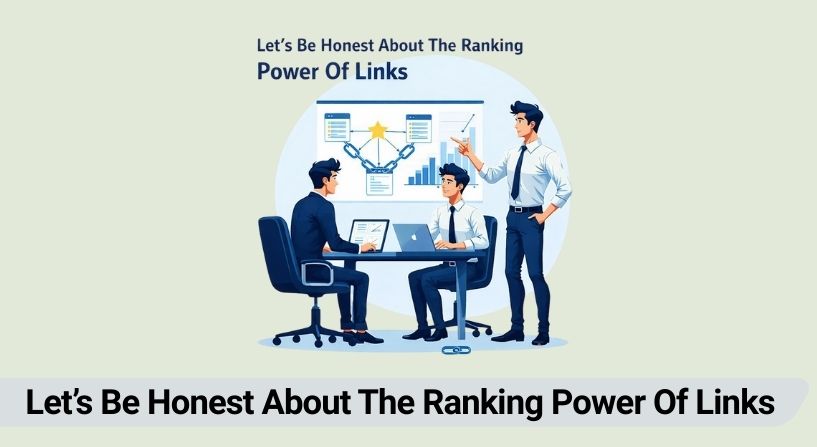
It’s time to openly discuss how links really function in modern SEO and AI-driven search experiences.
Understanding the Real Purpose of Link Building
The primary goal of link building today is not manipulation—it’s about demonstrating that a website is credible and helping search systems clearly understand the subject matter of your pages. Trust is communicated through the quality of websites that link to you and, equally important, through the websites you choose to link out to.
Being selective is critical. Earning links from reliable, relevant sources and avoiding questionable outbound links plays a major role in how search engines assess trust.
Why Link Context Is More Important Than Ever
The relevance of the page hosting a link is now crucial. A link placed within closely related, meaningful content sends a strong and accurate signal. The surrounding context must align precisely with the destination page, ensuring topical consistency and clarity for search engines.
Outbound Links Can Hurt Trust
Links pointing to low-quality, spammy, or unsafe websites can negatively impact a site’s credibility. If a website contains such outbound links, it’s often best to treat the entire domain as unreliable and avoid engaging with it.
This is because search engines analyze both inbound and outbound link patterns to assess trust. Poor outbound linking suggests deeper quality issues and can result in a site losing its ability to pass ranking value, such as PageRank.
The Concept of the Reduced Link Graph
Search engines maintain a filtered version of the web known as the Reduced Link Graph. In this model, spam-heavy or low-quality sites are excluded, leaving only trusted websites to influence rankings and link signals.
Think of it as a refined map of the internet: trustworthy sites remain interconnected, while spammy domains are isolated and ignored. Links from within this trusted network still matter—but only there.
Content Can Rank on Its Own—But Links Still Decide Inclusion
Modern search engines are capable of ranking pages using content alone. However, links still play a supporting role, especially in verifying legitimacy. One challenge today is that the overall link ecosystem has weakened—fewer experts actively publish and share insights compared to a decade ago.
This has reduced the overall strength and reliability of traditional link signals.
Links as a Quality Filter, Not a Ranking Booster
Links are increasingly used to determine whether a website deserves to appear in search results at all. To remain visible, websites must carefully manage both where they earn links from and where they link out to.
The goal is to stay within the trusted core of the Reduced Link Graph, while spam-heavy sites remain grouped together outside it. Being part of this trusted network is essential for long-term visibility.
Is Traditional Link Building Dead?
Link building still matters—but the old methods no longer work. Mass email outreach, link volume chasing, and anchor-text manipulation have lost effectiveness. There simply aren’t enough high-quality websites to support these tactics.
Instead, link acquisition must be intentional, selective, and relationship-driven, focusing on a small number of relevant and trustworthy sources.
The Growing Importance of Citations
Mentions of your brand or website—without direct links—are becoming increasingly valuable. AI-powered search engines, including Google’s AI Overviews and AI Mode, frequently use citations to assess authority.
Sponsored or native content can also generate citations safely, as long as:
- The content is clearly labeled as sponsored
- Outbound links use nofollow
- The source itself is credible
When done correctly, this improves visibility without harming rankings.
Key Take aways
Links Signal Trust and Relevance
Links now serve mainly to confirm authenticity and topical alignment rather than directly boosting rankings through volume or anchor text tricks.
The Reduced Link Graph Is Critical
Search engines ignore spam-heavy sites and rely on a smaller, trusted network. Falling outside this group can lead to exclusion.
Content Leads, Links Validate
Strong content can rank independently, but links act as a credibility checkpoint—especially in competitive spaces.
Content Leads, Links Validate
Strong content can rank independently, but links act as a credibility checkpoint—especially in competitive spaces.
Poor Outbound Links Are Dangerous
Linking to low-quality or suspicious websites can weaken trust and reduce a site’s ranking potential.
Old-School Link Building No Longer Works
Bulk outreach and aggressive link strategies are ineffective in an AI-first search environment.
Citations Matter More Than Ever
Brand mentions and references influence rankings in AI-powered search systems.
Sponsored Content Can Help—If Done Right
Clearly labeled sponsored articles with nofollow links are increasingly surfaced in AI search and support visibility.
Final Thought
Link building hasn’t disappeared—it has evolved. Its role today is less about forcing rankings and more about proving legitimacy and topical authority. By maintaining clean outbound links, forming selective partnerships with trusted websites, and earning credible citations, a site remains within the trusted Reduced Link Graph. This position allows strong content to compete effectively in both traditional search results and AI-driven search experiences.