


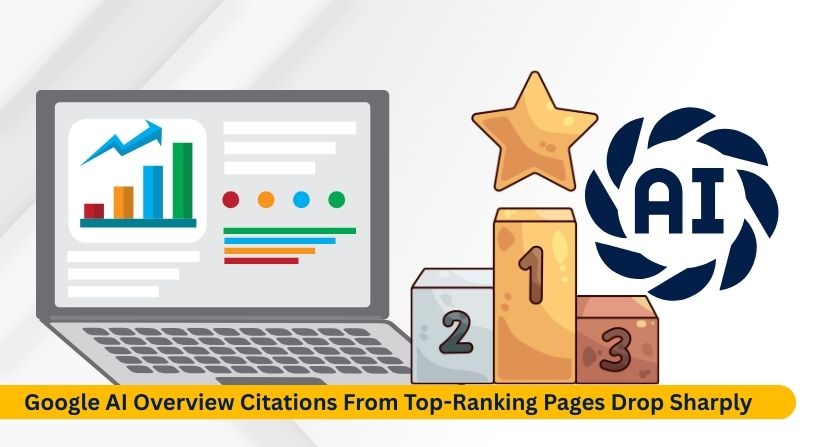
Recent research suggests that appearing in Google’s top search results is becoming a less reliable signal for being cited in AI Overviews than it was previously.
- Top rankings matter less for AI citations (CrUX) : New research shows that being in Google’s top 10 results is no longer a strong guarantee that a page will be cited in AI Overviews (AIO).
- Large-scale study by Ahrefs : The analysis reviewed 863,000 keywords and around 4 million AI Overview URLs to understand where Google’s AI selects its sources.
- Only 38% citations come from top-10 results : According to the data, just 38% of cited pages appear in the top 10 search results for the same query. Earlier research from July 2025 showed 76% overlap, indicating a significant drop.
- Many cited pages rank far lower :The remaining citations come from:
- 31.2% pages ranking between positions 11–100
- 31% pages ranking beyond the top 100
- Two analysis methods produced similar results :Ahrefs tested:
- Full search results (including ads, snippets, PAA boxes, and videos)
- Organic results only Both approaches showed similar patterns in citation distribution.
- Some citations appear outside traditional organic results : When looking only at organic listings, 36% of cited pages did not rank in the top 100, suggesting Google may pull information from other search features.
YouTube Is Becoming a Major Source
- YouTube appears frequently in AI citations : Among pages that did not rank in the top 100, about 18.2% were YouTube links.
- YouTube accounts for 5.6% of all citations : Overall, YouTube makes up a noticeable portion of AI Overview sources.
- Fast growth in citations : Ahrefs data shows YouTube citations increased by 34% in the last six months.
- Other studies confirm the trend
:
- Research from SE Ranking found YouTube was the most cited domain in health-related AI results.
- Earlier Ahrefs analysis also identified YouTube as the most common AI Overview source, while other AI modes relied more on Wikipedia and Quora.
Why the Numbers Changed
- Improved citation tracking by Ahrefs : The updated research includes better parsing methods that detect citations more accurately. Some of the drop in overlap may be due to improved data collection, not only algorithm changes.
- Google’s fan-out query process : Google may break a search into multiple related sub-queries.Pages that appear frequently across these related searches are more likely to be cited in AI Overviews.
- Gemini 3 upgrade context : Google upgraded AI Overviews to Gemini 3 globally in January, which could influence how sources are selected.
YouTube Is Becoming a Major Source
- YouTube appears frequently in AI citations : Among pages that did not rank in the top 100, about 18.2% were YouTube links.
- YouTube accounts for 5.6% of all citations : Overall, YouTube makes up a noticeable portion of AI Overview sources.
- Fast growth in citations : Ahrefs data shows YouTube citations increased by 34% in the last six months.
- Other studies confirm the trend
:
- Research from SE Ranking found YouTube was the most cited domain in health-related AI results.
- ○ Earlier Ahrefs analysis also identified YouTube as the most common AI Overview source, while other AI modes relied more on Wikipedia and Quora.
Why This Matters for SEO
- Ranking alone is no longer enough : High keyword rankings don’t guarantee visibility in AI Overviews.
- Content must cover topics more broadly : Since Google evaluates pages across related sub-queries, covering multiple aspects of a topic improves the chance of being cited.
- Use multiple content formats : Including videos, articles, and supporting resources may increase visibility in AI-generated search results.
Future Outlook
- The gap between rankings and AI citations may grow : If Google continues expanding the fan-out query system, AI Overviews may rely even more on diverse sources rather than just top-ranking pages.
Source Reference: Search Engine Journal
To Know more news - Let’s Be Honest About the Ranking Power of Links