




Mr. Dattatray Waghmode
Picture this: you walk into a digital store and, before typing a single letter, the homepage configures itself. The layout and featured products shift to match your recent browsing history and likely interests. This may sound like science fiction, but it is already becoming reality through artificial intelligence.
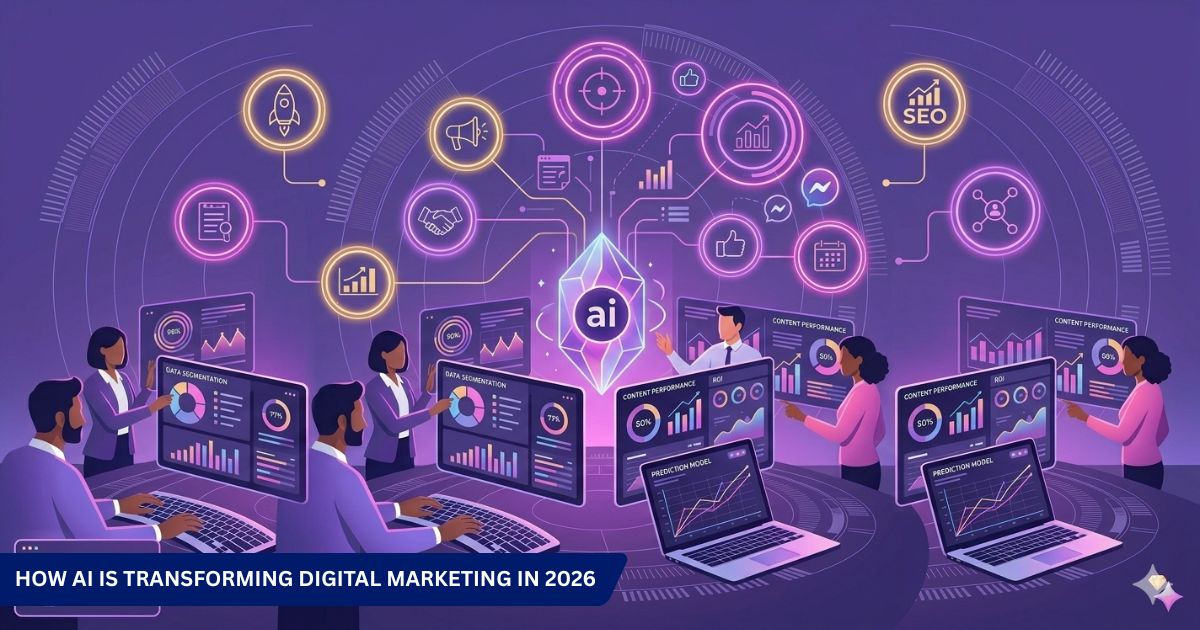
AI in digital marketing in 2026 is no longer a distant idea or a research experiment. It is reshaping how businesses plan campaigns, approach leads, connect with prospects, and convert interest into sales. Marketing is moving from manual, instinct-led strategies toward more intelligent, data-driven execution.
With an estimated 85-90% of marketers now using AI in some form, understanding its role has become essential.
What Is AI in Digital Marketing?
AI in digital marketing refers to using machine learning, data analytics, and automation to improve marketing strategies and outcomes. It helps marketers work faster, make better-informed decisions, and deliver more relevant customer experiences.
Common examples include:
- Chatbots that answer customer questions instantly
- Recommendation engines that provide personalized suggestions
- Automation tools that schedule and optimize campaigns
- Generative AI tools that help develop creative, strategic, and personalized content
The goal is to automate repetitive work, improve campaign accuracy, and give marketers more time for strategy and creativity.
Top Ways AI Is Transforming Digital Marketing
AI-Powered Content Creation
Content creation is one of the most common uses of AI in marketing. Work that once took hours, such as drafting a long blog post, can now begin in seconds. AI can also help generate ad copy, product descriptions, email variations, and social media captions. Used responsibly, these tools save time, improve consistency, and help teams scale production.
Hyper-Personalization
Generic content is becoming less effective. AI analyzes behavior, preferences, and past interactions to create more relevant customer experiences. Examples include customized email campaigns, personalized product recommendations, and dynamic website content. When users recognize their needs in the experience, they are more likely to engage.
Predictive Analytics
AI-powered predictive analytics helps marketers forecast trends and customer behavior. Instead of relying only on guesses or historical spreadsheets, teams can identify high-performing campaigns, anticipate customer needs, and allocate budgets more efficiently.
Chatbots and Customer Support
AI chatbots can operate around the clock, handle multiple conversations, and provide immediate responses. They help prevent leads from being lost outside business hours while reducing support costs and improving response times. Human oversight remains important for complex or sensitive situations.
Voice and Visual Search Optimization
Search behavior is changing as voice assistants and image recognition become more common. AI helps marketers prepare content for natural-language voice questions and image-based search results, creating an important new dimension in SEO.
Benefits of AI in Marketing
- Automation of repetitive tasks and significant time savings
- Higher return on investment through better campaign optimization
- Real-time insights for data-driven decisions
- More precise targeting based on user behavior
In short, AI helps marketing teams accomplish more with the resources they already have.
Challenges of AI in Digital Marketing
- Data privacy and security concerns
- Over-reliance on automation and loss of the human touch
- Implementation, integration, and ongoing maintenance costs
Businesses can address these challenges by balancing human expertise with AI capabilities and by following clear privacy, quality, and security standards.
The Future of AI in Digital Marketing
Several developments are likely to become more common:
- AI-generated video for marketing campaigns
- Personalization at an individual customer level
- Real-time marketing automation driven by live user behavior
The role of AI in marketing will continue to expand, but successful implementation will still depend on strategy, quality data, and human judgment.
Final Thoughts
Using AI in marketing is becoming a strategic requirement. It can improve relevance, speed, accuracy, and personalization, but it works best when paired with human expertise.
Dexcel Digital Hub combines modern technology with experienced marketing strategy to deliver speed, precision, and the human touch. To explore how we can help, email sales@dexceldigitalhub.com.